Best Workout Shirt Color to Hide Sweat
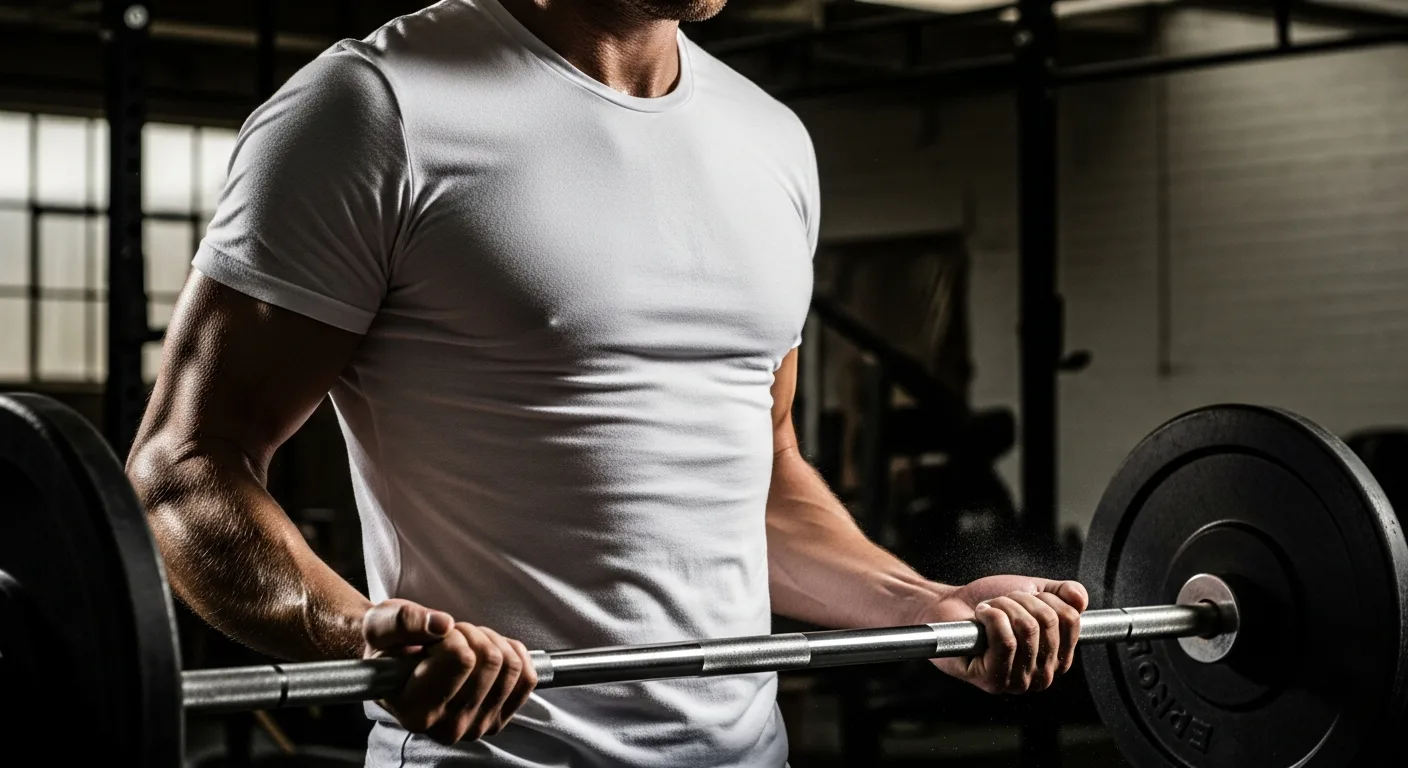
The color of your workout shirt has more impact on whether you look like you just stepped out of a sauna than the fabric does. The wrong color shows a sweat shadow across your chest the moment you start warming up. The right color stays visually consistent through a brutal cardio session. Most athletes pick gym shirt colors based on style, then get frustrated when the shirt that looked clean in the mirror at home is soaked-looking ten minutes into the workout. The science of why some colors hide sweat and others amplify it is simple, and once you understand it, picking gym shirts becomes much easier.
Below is the actual color-by-color breakdown of which workout shirt colors hide sweat best, why grey is genuinely the worst choice (despite being the most common), and which less obvious colors quietly outperform everyone's defaults.
Why Sweat Shows on Some Colors More Than Others
Sweat does not change the color of your shirt. It changes how light interacts with the fabric. Wet fabric absorbs more light and reflects less, which makes the wet area appear darker than the dry area around it. The visibility of that darker patch depends on three things: how strong the contrast is between wet and dry, how much surface area the sweat covers before evaporating, and how the fabric scatters light.
Mid-tone colors , heather grey, light blue, lavender, dusty pink , show sweat the most because they have the largest visual contrast between dry (light) and wet (dark) states. Solid black hides sweat well because the wet patch is barely darker than the dry fabric around it. Pure white can also hide sweat well, because wet white fabric becomes slightly translucent rather than significantly darker , the contrast remains low. Patterns and prints fragment the visual, breaking up any sweat shadow into pieces the eye does not register as a continuous wet patch.
Color-by-Color Sweat Visibility Ranking
Best at Hiding Sweat
- Solid Black: The undisputed king. Wet black fabric is barely darker than dry black fabric. The contrast is minimal. Black absorbs more heat in direct sun, which is the only real downside for outdoor training in summer.
- Patterned and Printed: Camo, tie-dye, all-over prints, and large logos break up the visual field. A sweat patch on a busy pattern blends into the design rather than reading as a continuous wet zone.
- Navy Blue: Almost as effective as black. The dark base color minimizes wet-vs-dry contrast. Slightly cooler in direct sun than black.
- Charcoal Grey: The dark end of the grey spectrum behaves more like black than like heather grey. A solid charcoal hides sweat reasonably well , much better than light or heather grey.
- Pure White: Counterintuitive but true. Wet white becomes slightly translucent rather than darker. The contrast against dry white remains low. The watchout is fabric thinness , a thin white shirt becomes see-through when wet, which is its own problem.
Worst at Hiding Sweat
- Heather Grey: The single worst color for hiding sweat. The light, mottled grey turns dark grey almost instantly when damp, creating maximum visual contrast. Despite being the default color of cheap gym tees everywhere, heather grey is the wrong choice if you sweat at all.
- Light Blue, Lavender, Dusty Pink: Mid-tone pastels behave like heather grey. The transition from light dry to dark wet is dramatic and very visible.
- Powder Blue and Sky Blue: Particularly bad on the chest and back, where sweat patches form first. The wet shadow reads as a clearly different color.
- Tan, Khaki, and Olive: Mid-tone neutrals show sweat almost as badly as heather grey, especially on synthetic fabrics where the wet shine is more visible.
- Bright Red and Bright Yellow: Saturated mid-tones still show meaningful contrast. Not as bad as grey, but worse than dark or pure white options.
The Nike White Training Shirt Question
A common search is whether a Nike white training shirt or any white workout shirt is a good idea. The honest answer: it works if the fabric is thick enough. A heavy white polyester or cotton-poly blend will hide sweat reasonably well and stay opaque. A thin white technical shirt becomes see-through when fully soaked, which most athletes do not want. If you wear white to the gym, choose a heavier weight (170+ gsm) and consider a base layer for high-sweat sessions.
Top Picks
As an Amazon Associate I earn from qualifying purchases.
Sweat Patterns by Body Area
Sweat does not appear evenly across a shirt. Most athletes sweat heaviest down the center of the chest, between the shoulder blades, and across the lower back. These areas are also the most visible to other people. If you wear a color prone to showing sweat, these zones will give you away first.
A practical hack: shirts with darker color blocking on the chest and back, with lighter colors on the sleeves, hide sweat patterns much better than fully solid mid-tone shirts. Many performance brands now design shirts with intentional dark color blocking exactly for this reason.
Fabric Choice Still Matters
Color hides the visual evidence of sweat, but fabric controls how much sweat sits on the surface in the first place. A black 100% polyester shirt with strong moisture wicking will hide sweat almost completely , the sweat moves to the outer surface and evaporates before forming a visible patch. A black cotton shirt will still hold the sweat, just hide it visually until the shirt is fully soaked.
For maximum sweat invisibility, combine the right color (black, navy, patterned, or pure white) with the right fabric (polyester or polyester-blend with moisture wicking). That is the actual answer to the question of which workout shirt color hides sweat best.